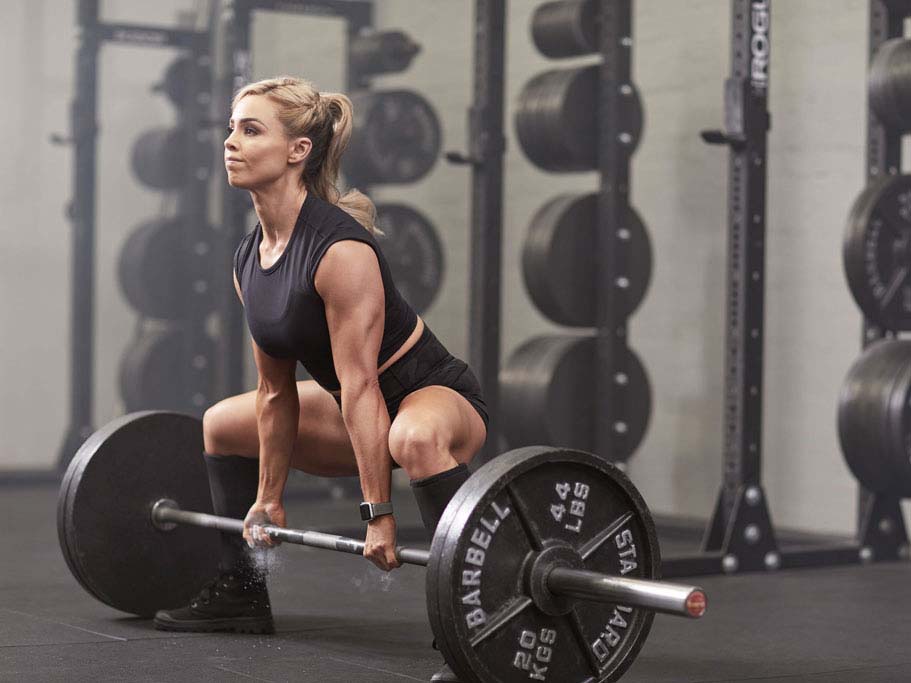
The deadlift is a technical, hip-dominant exercise. It requires tension, a braced neutral position and correct posture throughout the movement.
Learning to move correctly through an appropriate range is essential. Poor positioning can reduce your strength and increase the risk of injury.
Why does deadlift technique matter?
Before attempting a deadlift, you need to understand the three-point hip hinge. This teaches you to move through your hips while maintaining a stable back position.
I recommend working through the following three skills. Each stage builds on the previous one, helping you develop control before progressing.
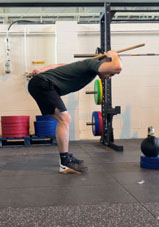
Skill 1: Learn the hip hinge
Start without any load. Take a PVC pipe or long broom handle and stand with your feet around hip-width apart, toes facing forwards.
Hold the pipe along your back, maintaining three points of contact as shown in the image. Slightly bend your knees, send your hips backwards and hinge your upper body forwards. Keep those contact points throughout the movement.
You should feel the muscles along the back of your body engage. These muscles form your posterior chain and play an important role in the deadlift.
Reverse the movement and return to standing, maintaining contact with the pipe as you rise. I recommend three sets of five repetitions.
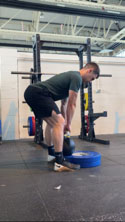
Skill 2: Introduce the kettlebell deadlift
Next, practise the hip hinge under load using a single kettlebell. Elevating it on two 20 kg plates reduces the range of movement and makes the starting position easier to establish.
Stand with your feet hip-width apart and toes facing forwards. Hinge at your hips to reach the kettlebell handle.
Squeeze the handle to create tension through your arms, shoulders and back. Keep your gaze down and your back neutral. Imagine you still have the pipe against your back.
Lift the kettlebell as you bring your hips forwards. Maintain a slight bend in your knees and keep the movement controlled.
Then send your hips backwards and lower the kettlebell onto the plates. Maintain tension and correct posture throughout each deadlift repetition.
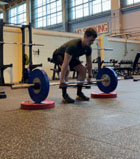
Skill 3: Progress to the barbell
Now bring these skills together with a barbell. Focus on deliberate practice rather than rushing to increase the weight.
I suggest starting with the barbell elevated. This shortens the range of movement and helps you establish a strong starting position.
As you become more familiar with the deadlift, and your mobility allows, gradually progress towards lifting from the floor. Keep applying the tension, control and hip movement you practised in the earlier stages.
Your deadlift checklist
- Position your feet hip-width apart, with the barbell over your midfoot.
- Hinge at your hips and bend your knees slightly to grasp the barbell.
- Squeeze the bar to create tension.
- Lift while maintaining a braced, neutral back.
- Reverse the movement and lower the bar with control.