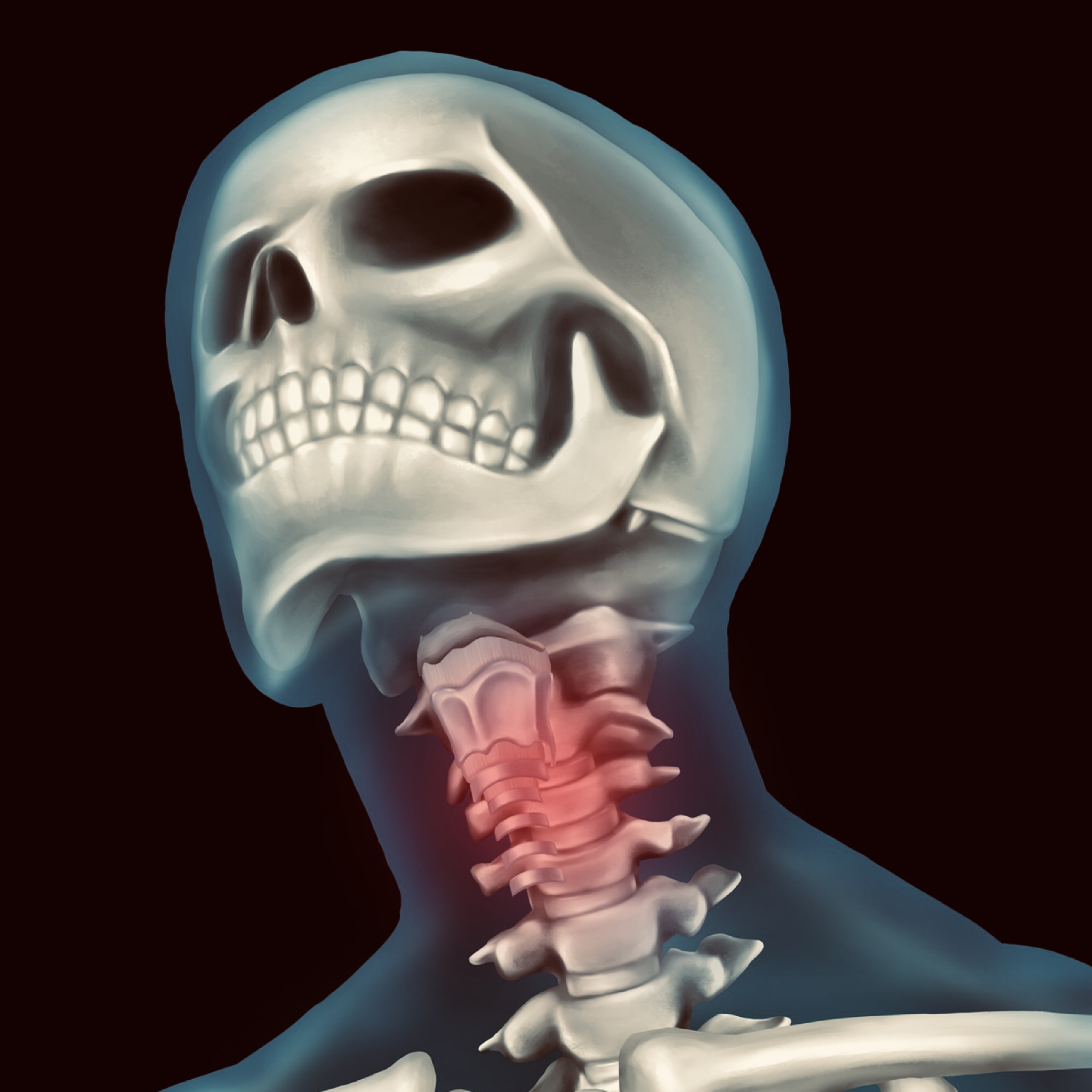
These movements are safe, gentle, and effective for most people. They target the root causes: posture, mobility, and muscle tension.
1. Chin tucks — resetting posture and peducing neck strain
Why this helps
Chin tucks strengthen the deep neck flexors — the muscles responsible for holding your head in a neutral position. They counteract forward‑head posture, one of the biggest contributors to neck pain.
How to perform
- Sit or stand tall.
- Gently draw your chin backwards (like making a double chin).
- Hold for 3–5 seconds.
- Repeat 10–12 times.
Benefits
- Reduces pressure on the neck joints
- Improves posture
- Helps relieve tension at the base of the skull
2. Upper‑trap stretch — releasing tight shoulder and neck muscles
Why this helps
The upper trapezius often tightens when posture slips, or stress builds. Stretching it reduces stiffness and improves neck mobility.
How to perform
- Sit tall.
- Gently tilt your head to one side.
- Use your hand to apply a light stretch.
- Hold for 20–30 seconds each side.
Benefits
- Reduces muscle tightness
- Improves flexibility
- Helps relieve tension headaches
3. Shoulder blade squeezes — strengthening the upper back
Why this helps
Weak upper‑back muscles force the neck to work harder. Strengthening the scapular muscles helps restore balance and reduce strain.
How to perform
- Sit or stand tall.
- Gently squeeze your shoulder blades together.
- Hold for 3–5 seconds.
- Repeat 12–15 times.
Benefits
- Improves posture
- Reduces neck and shoulder tension
- Supports long‑term mobility
The benefits of adding regular massage to your wellbeing programme
Massage is one of the most effective ways to complement neck‑mobility exercises. It works on the soft tissues that become tight, overworked, or sensitive.
How massage helps
- Reduces muscle tension in the neck, shoulders, and upper back
- Improves circulation, helping tissues recover faster
- Enhances mobility by releasing tight fascia
- Supports posture by relaxing overactive muscles
- Reduces stress, which is often a major contributor to neck pain
- Improves long‑term comfort when combined with exercise
Massage doesn’t replace strengthening or mobility work — it enhances them. Together, they create a powerful routine to reduce stiffness and prevent flare‑ups. Did you know that at PJG we offer a weekly stretch and mobility class that incorporates neck work to help rebalance your posture and relieve neck tension?